



















News
European technologies in security and space
Commissioner Andrius Kubilius' visit to CloudFerro highlights the importance of European technologies for Europe's security and operational readiness

News
Commissioner Andrius Kubilius' visit to CloudFerro highlights the importance of European technologies for Europe's security and operational readiness

News
CloudFerro introduces Search Agents & Knowledgebases to Sherlock, making it easier to build AI assistants that answer questions based on an organization's own documents.
METEO Data Platform
Observations, radar and satellite data and model output in one European cloud. We run the infrastructure; meteorologists run the forecasts and AI.




Solution Overview
METEO Data Platform is a European cloud environment for collecting, storing, processing and sharing meteorological data. Secure storage, CPU and GPU compute and workflow tools sit in one place. Services connect existing applications, build AI forecasting and add capacity without replacing their IT estate.
GRIB, NetCDF, HDF5 and BUFR are processed with established meteorological and open-source tools. Existing workflows connect without unnecessary conversion.
Near-real-time observations, model output and historical archives sit in one scalable environment. A model run can be verified against decades of observations.
CPU and GPU capacity and Managed Kubernetes scale up for a model run, an AI experiment or operational processing, and back down when it ends.
Python, JupyterLab, TensorFlow and PyTorch for building AI models, with the GPU capacity to train, validate and run them in operations.
Backup, redundancy and disaster-recovery options, designed with each service to match how critical it is to forecasts and early warnings.
Key benefits
Every new sensor, finer model and growing archive adds to the infrastructure bill. The platform adds capacity as needed; data and applications stay with the service.
Forecasts and warnings run in EU data centres, under EU law, operated by a European company. Access, data sharing and deployment model are set by the service.
Higher resolution and new satellites don't have to mean a new procurement round. Storage and compute grow with the data, not with the hardware budget.
Less time on hardware maintenance and upgrades, more time supporting meteorologists, researchers and operational forecasters. We run the infrastructure underneath.
Data moves between national services, research institutes and international partners. Open datasets go public; restricted ones stay restricted.
Capacity follows actual demand: cloud resources for peak runs, AI development and growing archives, instead of hardware that sits idle between them.
Use Cases
Built for services that collect more data every year than their own infrastructure can carry.
National and international services collect, store, process and share observations, radar and satellite data and model output across interoperable systems.
National services and crisis centres process observations and forecast models at scale for severe-weather monitoring and warnings on storms, floods and heatwaves.
Research teams train, test and run AI forecasting models on large meteorological datasets and scalable GPUs, without investing in dedicated hardware.
Weather data on sovereign infrastructure supports defence organisations in mission planning and situational awareness. Sensitive workloads can run on Private Cloud.
Weather-service providers build forecasts for wind and solar output, route planning and irrigation on the same data and compute.
Bring one pipeline, archive or model. We'll scope it with your team and show how it would run alongside your current systems.
Architecture
Observations go in at one end. Forecasts, alerts and datasets come out at the other.
Identity and access management, encryption, audit logs and monitoring, with auto-scaling, backup and disaster-recovery options. WMO and OGC standards for external systems.
Stations, satellite and radar sources and external forecast products connect in batch or near real time, through pipelines built with established meteorological tools.
Historical observations, near-real-time data and model output in scalable cloud storage, with metadata catalogues, access policies and data-management tools added as required.
CPU and GPU clusters scale with the workload. Distributed processing, the Python ecosystem and JupyterLab do the heavy lifting, in orchestrated, scheduled workflows.
Existing meteorological applications and numerical models run alongside new AI forecasting workflows in TensorFlow or PyTorch, on compute that scales with the dataset.
Weather maps, time-series and anomaly dashboards with GIS integration, built on the platform with the service's own tools or technology partners.
Teams and partners share datasets, models and notebooks, with Git version control. External systems get data through REST or GraphQL APIs, streams and downloads.
Compute
Run and scale public cloud workloads in EU-based OpenStack data centres. Configure CPU, RAM, storage and OS, manage lifecycle actions.
Compute
Run AI, ML, and HPC workloads on high-performance GPU resources in CloudFerro cloud.
Compute
Run non-critical, fault-tolerant or interruptible workloads on low-cost OpenStack VMs in European data centres.
Storage
Create and manage persistent block storage volumes, backups, snapshots and volume groups.
Storage
Manage object storage containers and buckets for S3/Swift-compatible data access.
Containers & Serverless
Deploy production-grade Kubernetes clusters through GUI, CLI or Terraform without managing the control plane yourself.
Databases
Managed instances of PostgreSQL, MySQL, MariaDB, Valkey, and MS SQL Server. Automated backups, failover, and monitoring.
Private Cloud
Run your workloads in a fully isolated cloud environment hosted in CloudFerro’s Tier 3 European data centres.
Components
CloudFerro's European cloud is the base. Data, processing and AI components are configured on top for each service; specialised applications are built with its teams or technology partners.
Availability and scope of individual components depend on the selected architecture and implementation model.
Customer stories
CloudFerro led the WEkEO consortium for EUMETSAT and delivers cloud infrastructure for European meteorological and Earth-observation organisations. The same storage and compute sit under this platform.
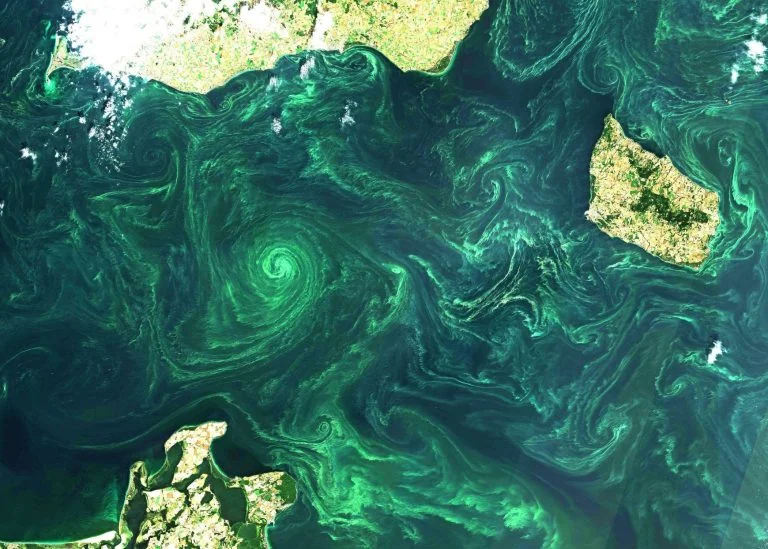
The DIAS hybrid cloud computing, built and operated by CloudFerro on behalf of the consortium, led by EUMETSAT, providing access to satellite data, in particular for monitoring the marine, terrestrial, atmosphere and climate environment.
Compliance
Standards for security, privacy and data protection in cloud environments.
Independently audited cloud security aligned with BSI requirements.
Information security based on the established German BSI IT-Grundschutz standard.
Authorisation to protect EU classified information up to EU SECRET level.
Frequently Asked Questions
Control, migration, tools and cost. Anything else, ask our experts.
Accelerate satellite data processing and delivery with an integrated environment for EO data ingestion, processing, archiving, and dissemination.
Process large EO datasets without downloading them, using compute resources available directly where the data resides.
Monitor agricultural areas and CAP requirements with a managed service powered by Sentinel data and cloud infrastructure.